
Launch control
The M3 has no sport button, so the way launch control is activated was adjusted. It works on every car the conversion supports, and the launch rpm is a flash option.
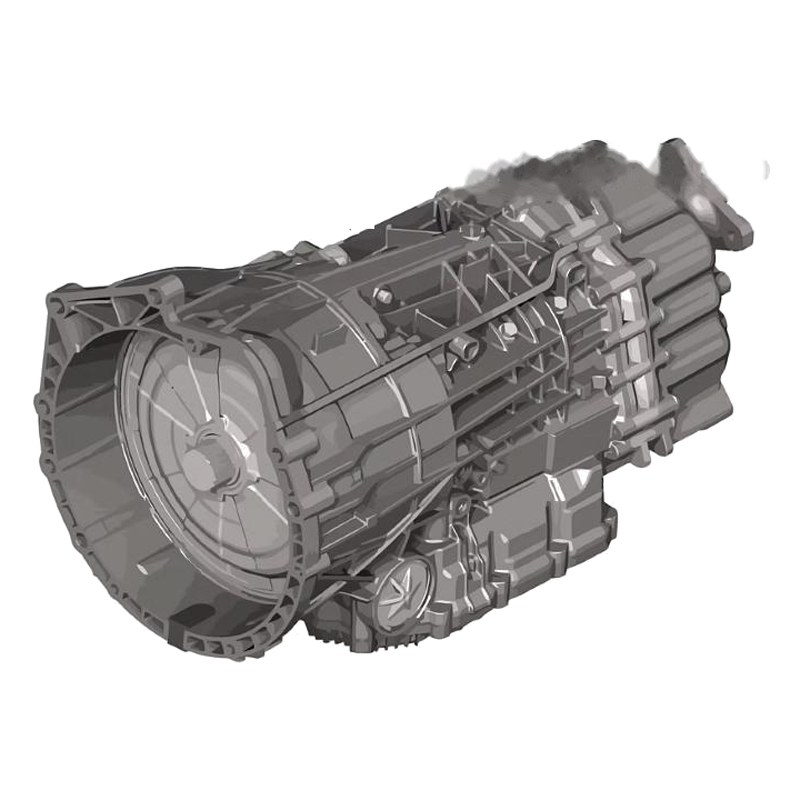
Flash your BMW 7-speed DCT from your phone. It works on the Gen 1 DCT in the 135i, 335i and Z4, behind the N54 or N55 engine, and the app is free on Android and iOS.
The M2's N55 has the Gen 2 DCT, which the app and the tunes don't support.
Writes tuned files and stock files to the TCU. The first flash is a full write of 5 to 7 minutes; after that a map change takes under a minute. The app tells you which it needs before it starts.
Gear, both clutches' pressures, targets and torques, shaft and wheel speeds, oil temperature and the shift map in use, with two gauges and CSV logging.
Fault codes with descriptions, the TCU's own usage statistics, every adaptation value it has learned, and the workshop service functions.
Completely customise the shift points of your transmission using the shift point editor.
The options are applied to the calibration as it's written, so changing one later only needs a map change, not a full write, and they're remembered between flashes. The one exception is M3 KOMBI, which patches the program.
Also on the Flash tab, and only for the full GTS conversion; it's off in the demo. The conversion carries 21 shift maps and the TCU picks between them on the fly, by mode and by how steep the road is. The drive mode maps work on level ground and the Incline maps take over as a hill gets steeper. A sportier mode skips the milder incline maps, so a small hill in XS stays in XS rather than dropping to A1.
The editor lets you move the up and down points on each map, with checks for the obvious mistakes like putting an upshift below a downshift, and three presets to go back to: Stock 335i, Stock Z4 and Stock M3. If you raise the points in a drive mode, raise them in the incline maps it moves up to as well, or the car shifts earlier the moment it sees a hill. And the maps aren't smooth lines on purpose. The steps are deliberate and they're how BMW laid them out.
On an M3 the cluster shows the Drivelogic level as a row of bars beside the gear, and an M-style gear display. The 335i and Z4 clusters can draw the same thing, but on those cars the gearbox never sends it: the normal shifter has no Drivelogic selector, and the code that fills the display only runs for the M3 shifter. It was the one part of the GTS conversion you couldn't have without fitting the M3 shifter.
M3 KOMBI is a flash option that fixes that. It patches the TCU program so a 335i or Z4 on the GTS conversion sends the M3 display data, and the cluster, coded for the Motorsport option, draws the bars and the M3 gear display.
It's new, and the app marks it experimental for a reason: it rewrites the TCU program rather than the calibration, and a program write carries a very small risk of a bricked module with cars that have communication issues.
The shift speed the gearbox is actually using on the current 335i and Z4 maps.
| Bars | When |
|---|---|
| 2 | D |
| 4 | D with Sport on, D/S, M, or the paddles in D |
| 5 | Sport on in D/S, in M, or on the paddles |
| 6 | M with Sport on, when DSC is in DTC or off |
Adding the mod and removing it both rewrite the program, so those two writes are full writes and the app asks you to confirm before each.
The KOMBI needs its Motorsport option coded on, and the app does that itself at the end of the flash. It codes it off again at the end of a write that removes the M3 KOMBI option. The Coding tab does it by hand if you ever need to, and shows the coding index.
It's offered for GTS conversion maps with the normal shifter, never on stock or demo files. The 135i's cluster can't display this information, but if you have retrofitted a 335i cluster the option will work for you.
The DCT GTS Conversion is the gearbox software from the M3 GTS, ported to the N54 and N55 cars. Strictly it's the CRT version, the rarer and more extreme one: it uses the GTS software with a few things BMW tweaked for that limited run. The aim throughout was to change as little as possible. BMW and Getrag wrote this software to get the most out of the gearbox. Beyond the shifter logic, the only changes are the tables that relate to the engine's torque characteristics and the DSC.
The M3 has no sport button, so the way launch control is activated was adjusted. It works on every car the conversion supports, and the launch rpm is a flash option.
The M3's DSC is slightly different, so the handful of functions that talk to it use the values from the normal cars.
Maximum line pressure is raised to 19 bar, which the gearbox only reaches for somewhere around 900 Nm and above, and the torque limiters are removed.
The Z4 and 335i differ in a lot of small ways, the electronic handbrake among them. I have a 335i DCT and a Z4 DCT, so it's tested on both rather than on a 335i alone.
Faster upshifts and downshifts, more accurate rev-matching on the way down, smoother shifts at low load, and the hesitation pulling away at junctions dealt with.
The main hurdle was the shifter. The M3 selects its five Drivelogic levels with a rocker on the shifter, and a sixth comes with DSC off at level 5. Those levels change the shift speed, the torque ramp rates and which shift map is used. The 135i, 335i and Z4 only ever reached the first two or three of them, through the sport button, because that's all BMW gave them. I don't like the M3 shifter much and it's a painful retrofit, so the conversion remaps the sport button and the Z4's mode selector to reach all of them instead.
The gearbox in these cars is the Gen 1 DCT, Getrag's 7-speed dual clutch, and the control unit BMW calls the GS40: a Continental unit built around an Infineon TriCore processor, running Getrag's software. It went into the 135i, 335i and Z4 behind the N54 from 2008, later behind the N55, and into the E9x M3 and M3 GTS behind the S65. Same hardware, same software layout, three different programs. Knowing which one a car has, and what BMW changed between them, is where any conversion starts.
On the same program an M3 and a 335i share about four fifths of their calibration. What differs is the part that matters: the clutch control, the program logic, the 24 shift maps, and the torque, creep and launch tables.
The GTS is the pinnacle of it. It got a program of its own with code the M3 never had: in M at the higher Drivelogic levels its upshifts barely cut power and slam the next gear in, and its paddle downshifts run at full speed. It was the last thing BMW and Getrag did with this gearbox on the E9x, and its gear-dependent clutch logic carried on into the F8x M3 and M4. That's why the conversion starts from it rather than from the M3.
The first production software for the N54 cars ships in August, with a second code base that September. The part number history runs back into pre-series units from 2007.
The M3 GTS gets its first calibration in September, with launch control set at 3500 rpm, on the program of the day. The 2008 N54 code is re-approved the same month for the cars still being built.
A new base software arrives. The first release lasts ten weeks; the December one is a single program for both the N54 cars and the M3, with calibrations for each engine and market. The M3's calibration was never touched again.
In March the GTS is split off onto a program of its own, with its final calibration. In November every N54 car moves to a revised code base, carrying the same driving calibration, now with ten sets covering the 135i, 335i, Z4 and every market.
One more update, for the Z4 35is and a few markets, on another new base software. Nothing has been released since. The same family carried on into the F8x M3 and M4, with the GTS's gear-dependent clutch logic kept and the N54's speed controller alongside it.
Any Android device that runs Android 8 or higher and has access to the Google Play Store, or any iPhone or iPad that runs iOS 15 or higher. Newer devices typically provide better performance and quicker flashing.
On iOS keep the app open and on screen while a write is in progress. iOS suspends apps that move to the background, which would interrupt it.
Three adapters work with CAFlash: MHD WiFi (fastest and most reliable), Thor WiFi (slightly slower), and USB K+DCAN cables (performance depends on cable quality).
On iPhone and iPad only the WiFi adapters are supported. iOS does not support serial adapters, so a K+DCAN cable can't be used there.
Common causes include problematic Android devices interfering with communications and low battery voltage. Ensure the vehicle battery is fully charged and if possible connect a battery tender. Also ensure any devices that interfere with the CANBus are disabled, such as a JB4 or an after-market digital dashboard.
Tuned DCT files are available to buy from the CAFlash store at caflash.app/dct. There's also a free demonstration file that doesn't expire.
No. The conversion was built to work with the normal shifter in the 135i, 335i and Z4, with the sport button and mode selector giving access to all of the Drivelogic levels. The one thing the normal shifter couldn't give you was the Drivelogic display in the cluster, and the M3 KOMBI option now covers that on the 335i and Z4.
No. The M2's N55 has the Gen 2 DCT, which I don't support. The app and the tunes are for the Gen 1 DCT in the 135i, 335i and Z4.
Logs and diagnostic files are written to
Android/media/com.caflash.dct on internal storage
(Android/data/com.caflash.dct/files on Android 10
and earlier). A message shows the filename each time a log is
saved.
The hardware reference inside the file does not match the one read from your TCU. Check you have the correct file for your gearbox.
This is normal immediately after a write. Cycle the ignition, sometimes more than once, and the selector illumination will return.
The demo doesn't expire. It's capped at 6000 rpm and the shift map editor is off; everything else works like the full conversion.